Recently, there has been a significant growth of creatives working with social relations as their material in both art and non-art contexts. Cultural critics have examined the ways in which aesthetics in visual art can be replaced by ethical judgements and sociological analysis. On the one hand, the idea of social art was criticised because it was seen as a way for the government to instrumentalise art. On the other hand, social art was also seen as a way to promote amelioration and social reformation through an aesthetic shift towards the everyday.
Despite these differences, both arguments have marked the growth of social practice as a global phenomenon. Following these observations, my contention is to deepen this argument by writing from a perspective of someone who is witnessing firsthand the genuine commitment and dedication of those who are partaking in socially engaged cultural activity.
As someone who is currently “playing ball” with the art world, what I see happening within the gallery system of art advisors and curators seldom takes stock of both the historical or current complexity of our time: the instrumentalisation of art, institutional limits, or the idea of aesthetic experiences as inextricable from pedagogy and politics. The artists we see in museums, the artists that we should follow, these ideas have all been very heavily manipulated. It is true that institutional support will increase an artist’s prices and give them a wider audience, but ultimately it takes a lot of power away from them.
I am in no way rejecting the existing gallery model. At the end of the day, that’s how we’re getting paid. What I’m trying to do here is trace those examples that have found ways to survive via non-commercial means by turning towards the streets, abandoned spaces, or even using their own homes. Capitalism has wrapped itself around the art world, and in response, we are seeing a rapid rise in socially engaged cultural activity, but also growing increasingly wary of the risks that come with their institutionalisation. This antinomy marks the terrain of struggle within today’s cultural imaginary of art and politics.
My motivation for this research came from a sense of dissatisfaction with the way galleries and institutions engage with social practice. I found that the rhetoric surrounding art and community often leans on nostalgia for a life untouched by capital, presenting them as utopian practices that are actually a social and pedagogical force that allows institutions to continue establishing a sense of moral authority in imagining our cultural future.
Then what are the contemporary stakes of social practice today? Can it escape institutionalisation? Currently I don’t have the answer to these questions, but I am hoping to provide a ground for understanding how social practice interacts with aesthetics, politics and culture in the 2020s, and to fully realise the potential of art in creating a better world, as catchphrasey as that sounds.
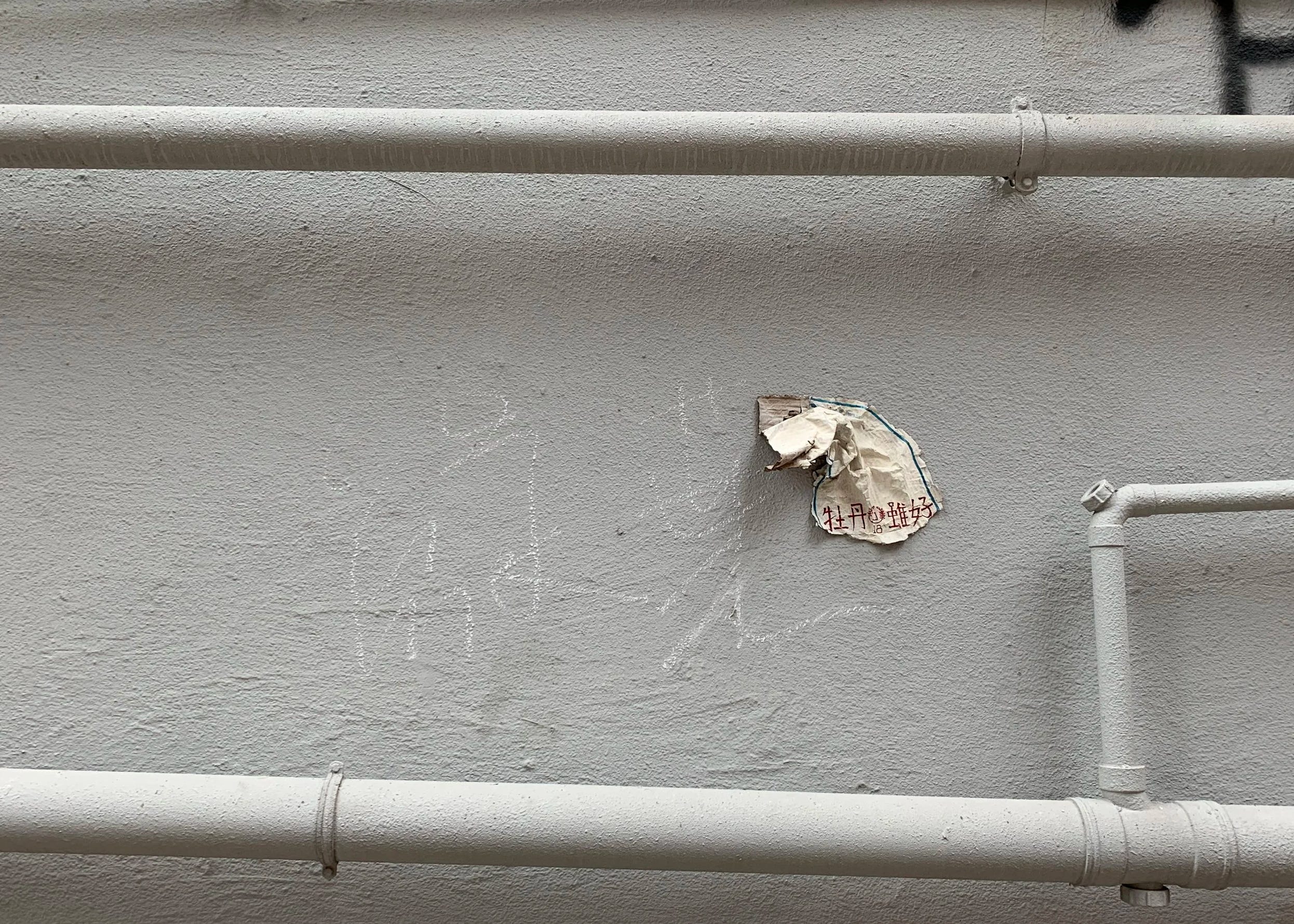
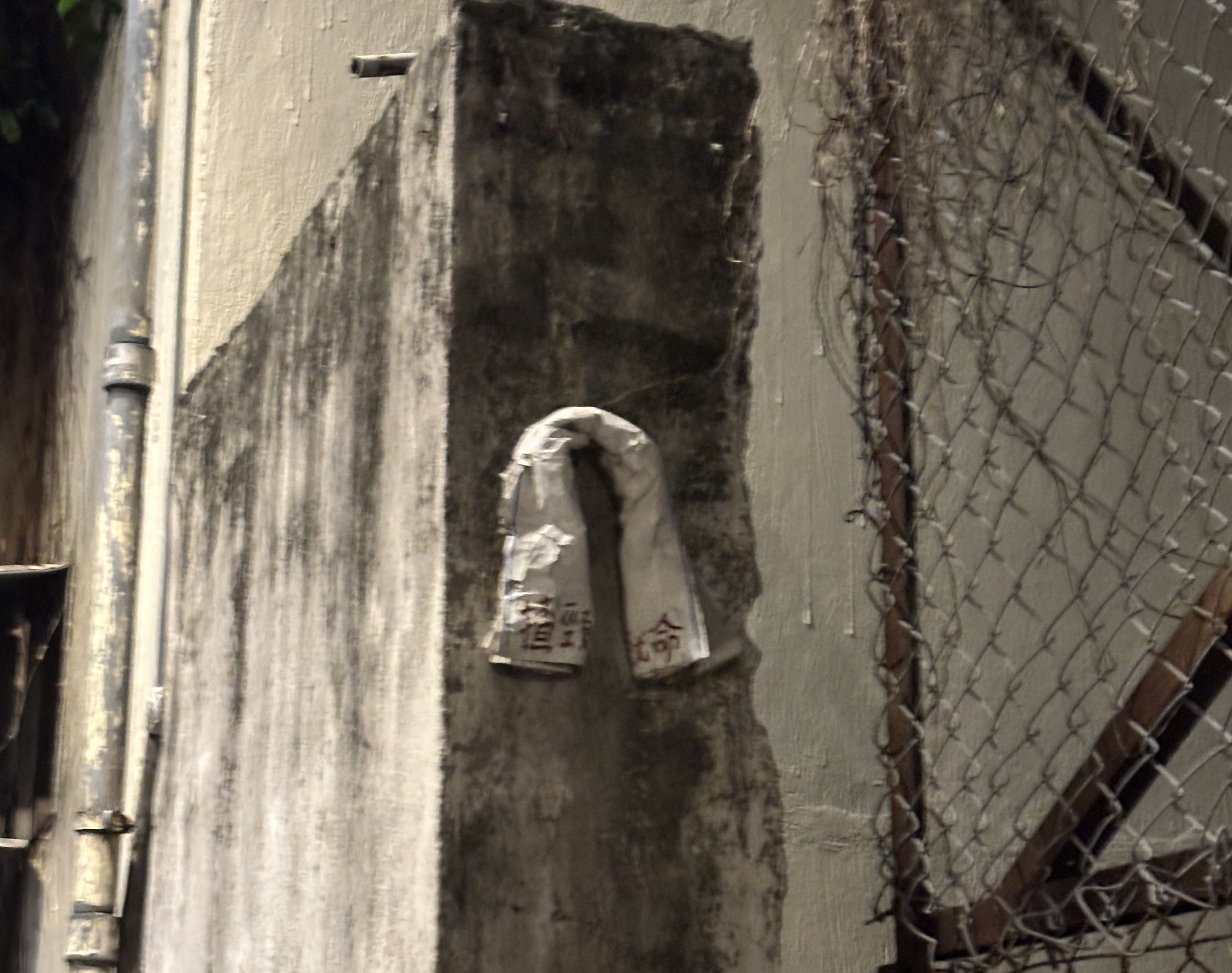
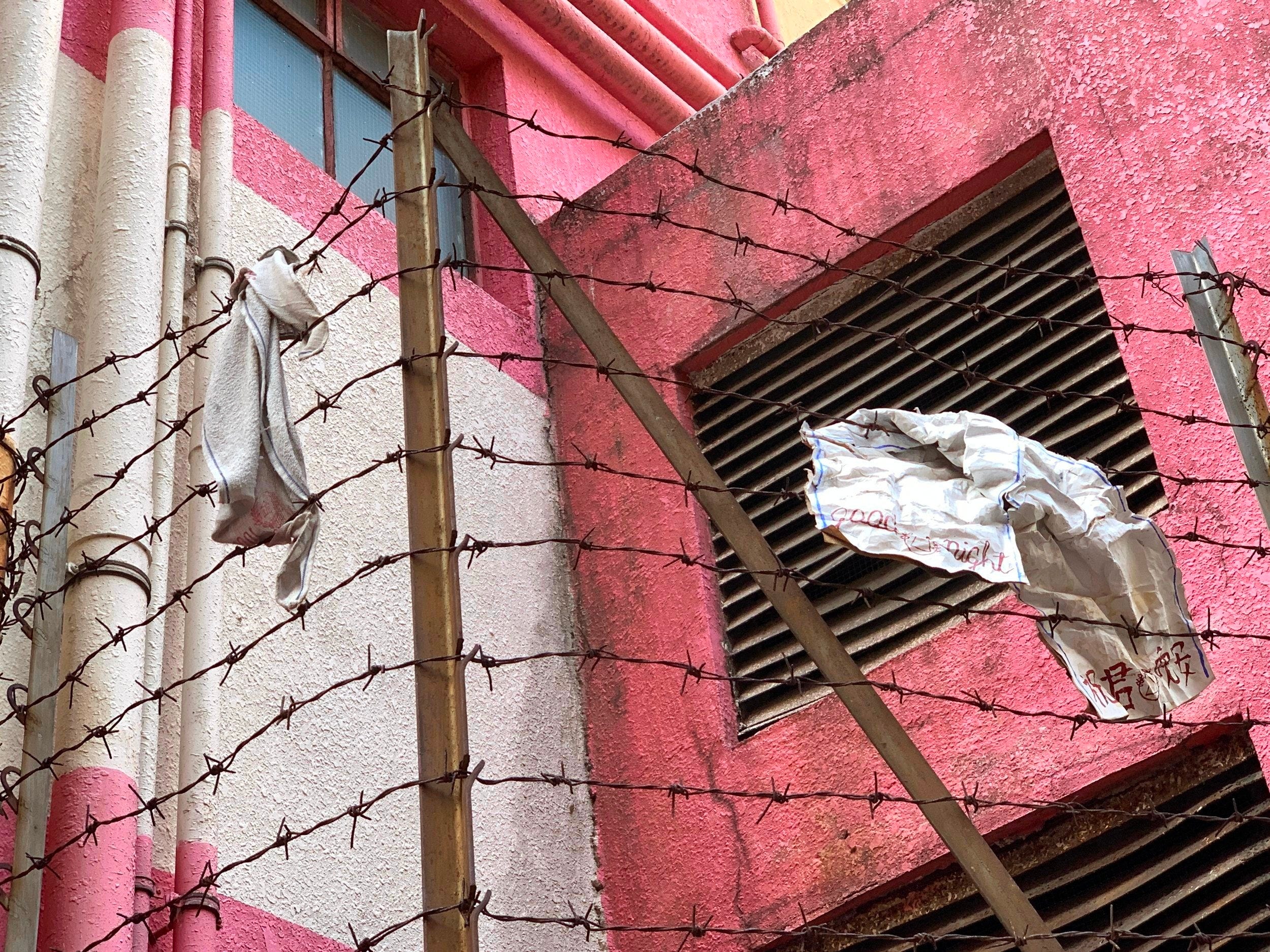
Go Hung (高哼) is one of the individuals at the forefront of these socially engaged cultural activities. As a Hong Kong-based creative who works independently of the gallery ecosystem, he remains very aware of our reliance on the commercial infrastructure that shapes our choices. As philosopher Han Byung-Chul observes, “an absolute power would be one that never became apparent, never pointed to itself, one that rather blended completely into what goes without saying.” Our reality is manufactured through institutional legitimacy, and no one understands this better than Go Hung himself. Despite being an educator, he tries to avoid propagating his own opinions and defining his student’s learning experience for them. “Education and manipulation is a fine line,” says Go Hung in an interview with me during his residency at Schoeni Projects. “There was a period of time when I would put statistics on my good morning towels. In a way, I’m sharing my research findings with people on the streets, and I wanted to communicate how unaffordable the property market in Hong Kong is. But at the same time I’m ‘educating’ them with my research findings that we should not spend 50% of our family income on rent.”
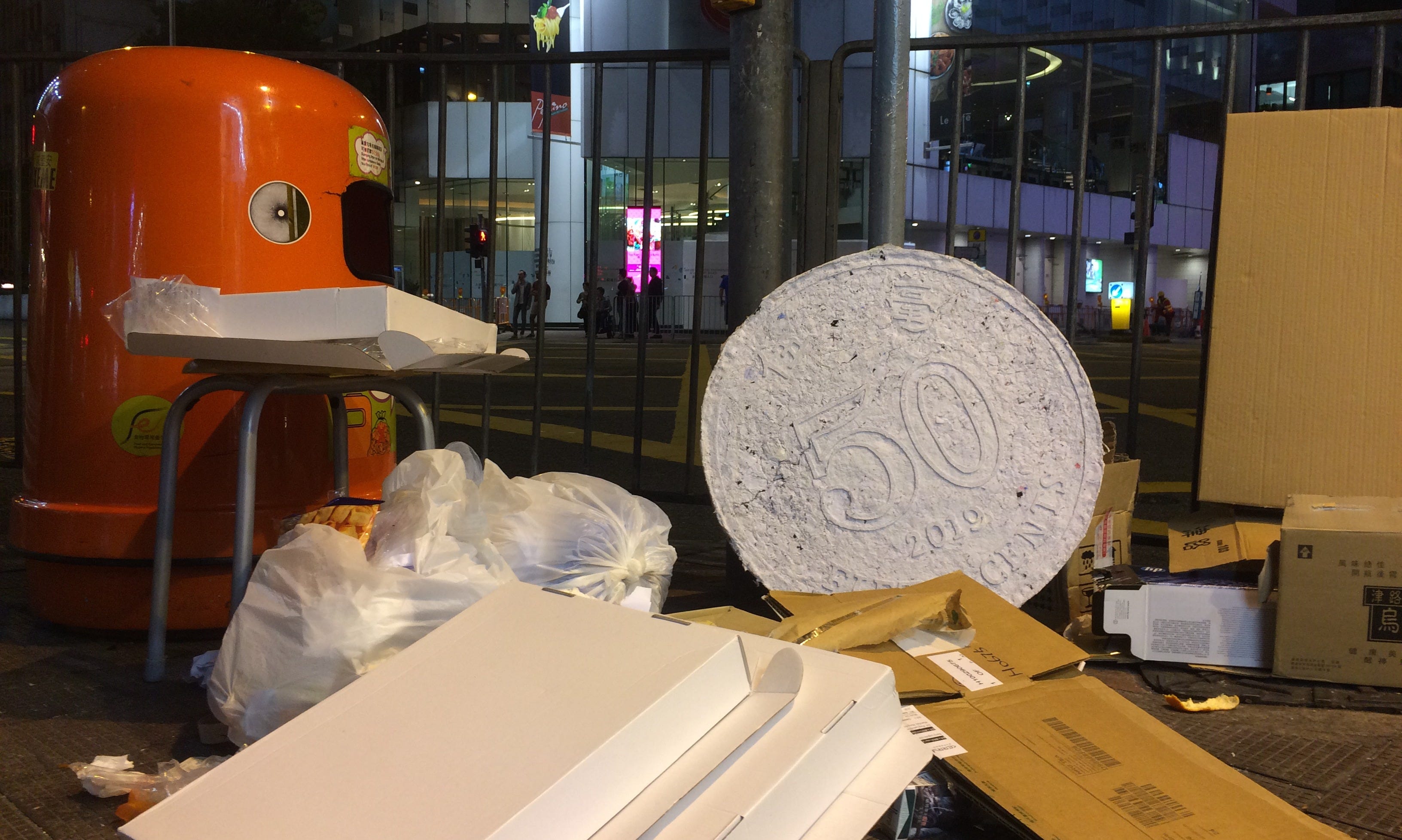
Go Hung describes his projects as documentation rather than art: “My mentality is [aligned with street art], but using the street is also part of the concept.” He appropriates the capitalistic strategies of marketing that you find on the street, taking those sinister forms of manipulation born out of the commercial, mainstream world, and flips them on their head by using them for creative purposes. “The reason I make work is because I want to record what I see on the streets at that time. Cardboard grannies are something I see everyday so I want to record it. It’s a shit phenomenon but I want to record it.”
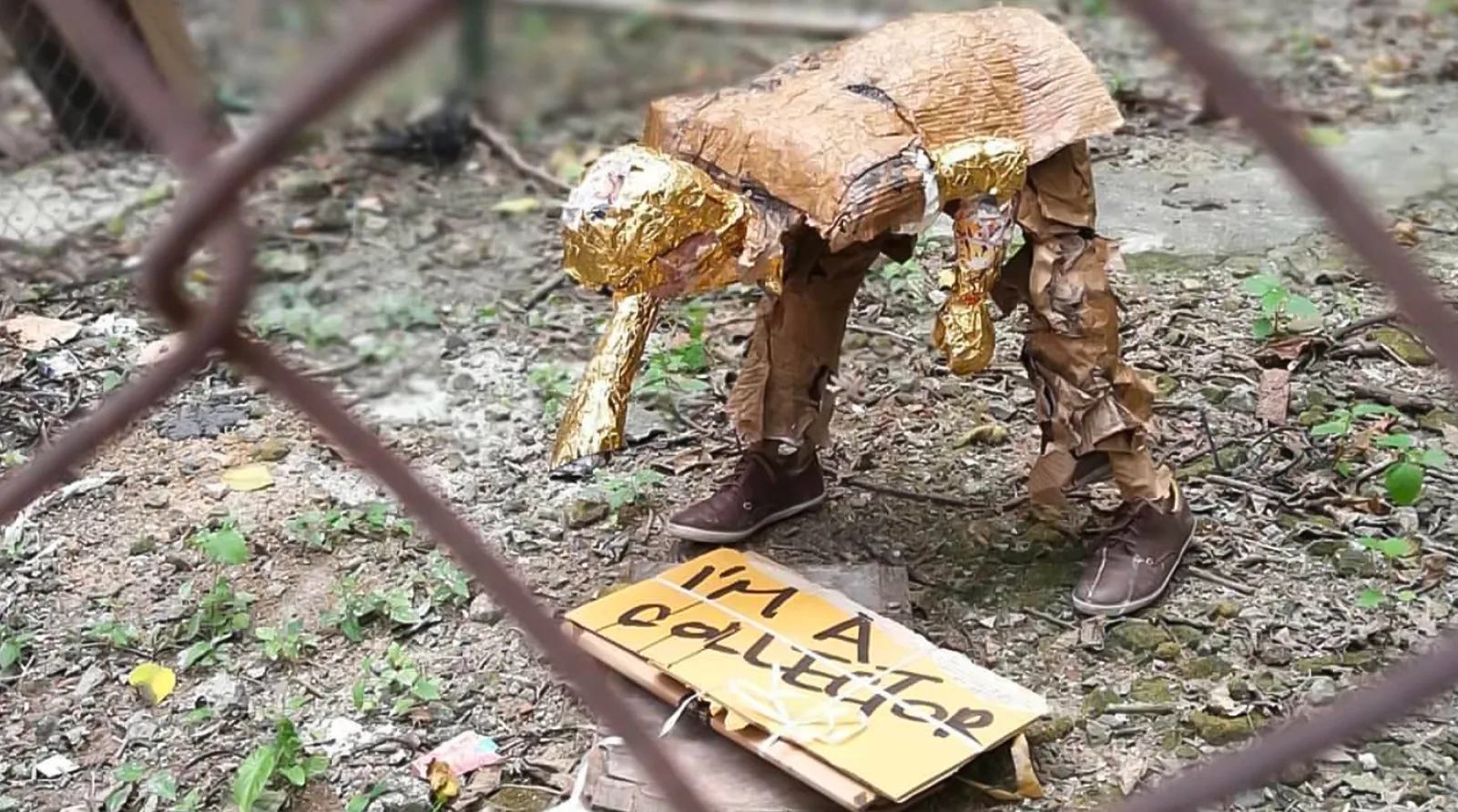
As someone who operates outside of commercial gallery frameworks, Go Hung’s projects and wider life philosophy offers a concrete example of the stakes of making socially-engaged art: the hypocrisy he subjects himself to in producing cultural work that addresses subjects who are continuously positioned outside the dominant logic of the nation, while being part of the social infrastructures that support the reproduction and circulation of capital.
I am not implying that we are in a hopeless decline towards neoliberal impoverishment and cultural stagnation. Instead, I am bringing attention to those little pockets of resistance that are being produced and maintained by people who are at the same time contributing to the production of the system that they are critical of.
I had the privilege to interview Go Hung, where he shares his accounts of education, the use of irony, his ideas of activism and how he negotiates his own hypocrisy. By addressing the contradictions inherent in socially engaged art, my aim is to develop a framework for engaging contemporary art practices that seek to work socially without falling into the pitfalls of nostalgia or naïve optimism about the political possibilities of the present, or into an oversimplified approach that attempts to sever social practice from its attachment to the historical categories of art.
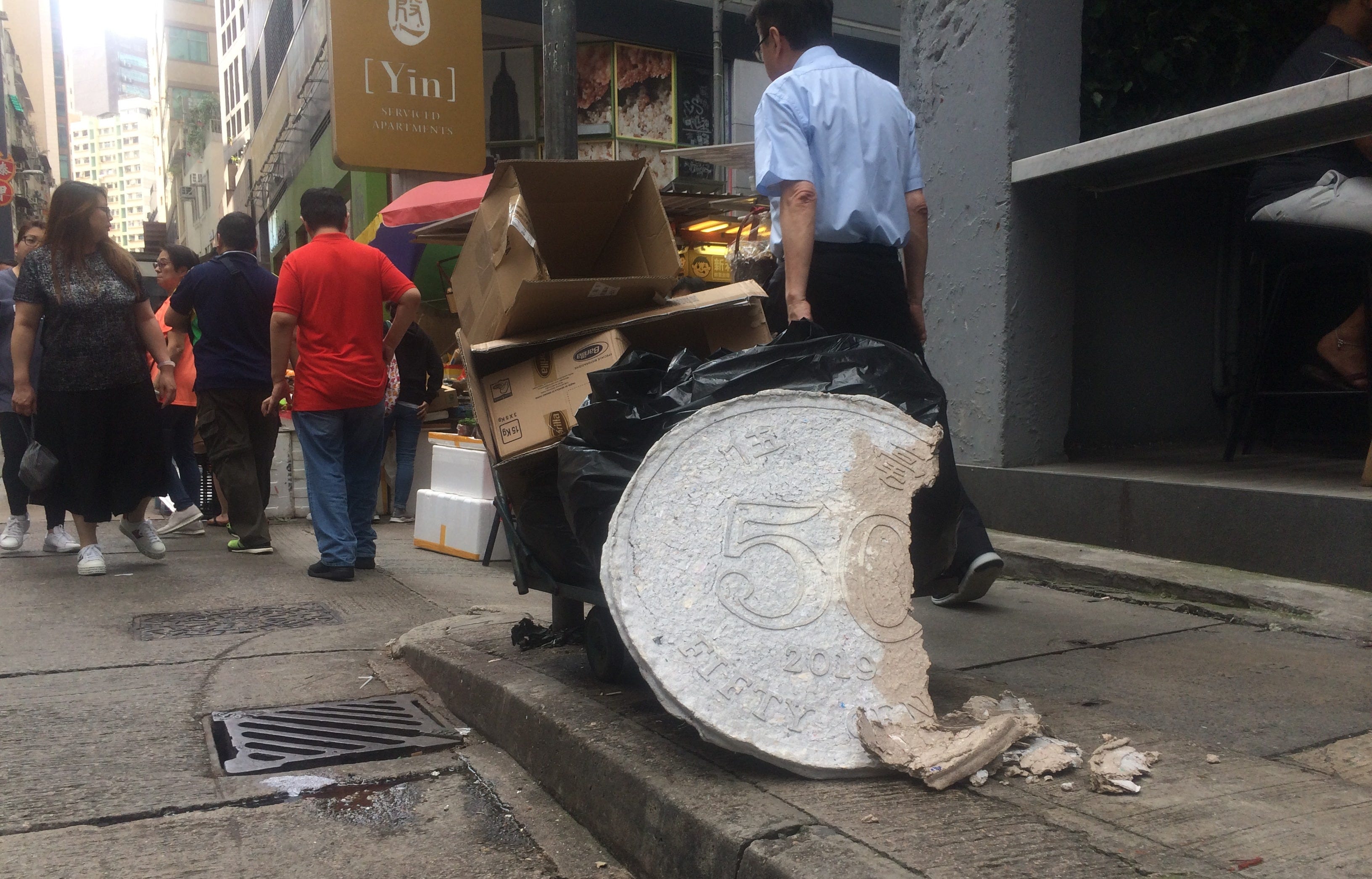
Iris: I think art doesn’t always have to be introducing new things to the world, but making sense of what is available. And you’re doing exactly that. You collect your materials from the streets, then “litter” them back for everyone to see.
Go Hung: It’s a perfect cycle, using the same materials from the incidents that I’m documenting. I am not original at all. I put my work out on the street when it’s like three, four am on a Tuesday. Initially, I didn’t think of putting my work outside, I was just making them at home. Until one day, my colleague came and saw all this “trash” and said, “so what’s the point of doing all of this?” So I put them out on the streets. That was how it started.
Iris: You were putting your works out on the streets at a time when Hong Kong was really sensitive. Do you see this as some form of activism?
GH: No, I don’t. If you’re in a glass bubble and you’re trying to break it but can’t, would you stop or carry on trying to break out? I would stop. I might stand up to break it when I feel like it, but I wouldn’t carry on because I would do something else.
Iris: Do you feel like you’re giving up something by not actively involving yourself in the gallery scene?
GH: I’ve not worked a lot with galleries long term or had exclusive representation. I develop my projects through Instagram. Media is influential. I’ve been working nonstop for six, seven years now. In the beginning it was only people who liked street art that knew me. But once one person knows, it spreads.
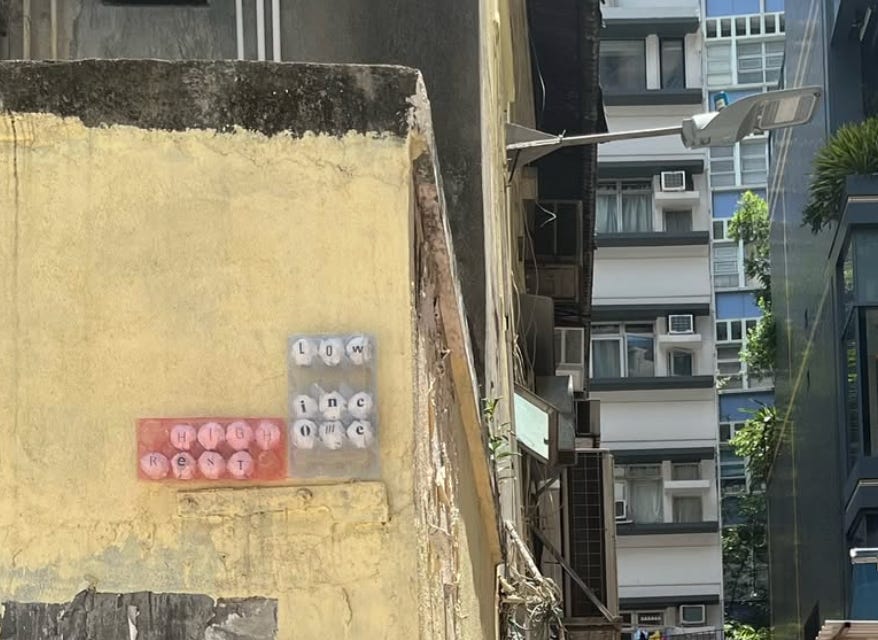
Iris: I meant it’s almost impossible to go undiscovered in the world we live in today. An entry point can be on the internet. Media is an alternative to or an extension of a gallery, in a sense.
GH: Generating sales is not really the most important thing for me. I don’t have a studio, I don’t have assistants. I work as a teacher, and it’s enough to support my living expenses and my projects. It creates a freedom for me.
Iris: A lot of people in the arts are asking questions like how do I make money? How do I sell my work? All those worries stem from financial burdens. But you’ve been doing this for many years. I guess the answer is to get a job. Find something you can do to support your art. An art career is an extremely rare opportunity that you can’t statistically depend on. I think art is always best when it’s made by circumstance, using what you have.
GH: When you work, don’t put 100% of your energy into it. If you can, you should take the piss out of work. Save some energy for yourself and invest in other things.
Iris: So what draws you to the streets?
GH: It’s a childhood thing, I mean, I’m 46 and I’m still wearing a fucking graffiti t-shirt. It’s made by a Hong Kong graffiti writer, 9rush. I started skateboarding when I was sixteen, seventeen. LMF, the Hong Kong band started at around the same time. In skate shops they were playing Nu metal music, punk or hip hop.
Iris: Those genres and their communities, did you relate to them?
GH: I think it’s [Hong Kong’s] colonial history, I can relate, it’s not as bad as slavery, but I can relate to the disadvantages of having skin colour. My grandparents’ generation faced more inequality. Growing up I watched a lot of Bruce Lee movies, and there were a lot of signs in them saying “Chinese and dog no entry” kind of shit. And it stuck in my brain.
Iris: Nowadays anyone can easily dip in and out of these different subcultures without really investing in it. Anyone can be a punk, a raver, or a goth. The underground becomes trendy.
GH: It’s so surreal isn’t it. The history and origin of those subcultures is now becoming hip and it becomes unaffordable to some people actually. Fashion rips off a lot of them and brings it to the mainstream and people forget about the context. It’s capitalism.
Iris: Does your work address that?
GH: I mean I’ve already commodified my work. I am being ironic. I started off by criticising marketing and advertising, but now I’m more or less doing the same thing.
IM: I think attempts by artists to “leave art” does not actually overcome the logic of capital. Life needs to be understood within the context of capitalist life. Capital subsumes our life. The question is not whether we should categorise social practice as art, but be critical of the system that makes such categorisation necessary in the first place.
Thank you to Go Hung for very kindly inviting me to his studio in London and preparing a delectable dinner of pizza and chicken tenders.